
Maths: Why Distance and Displacement Differ
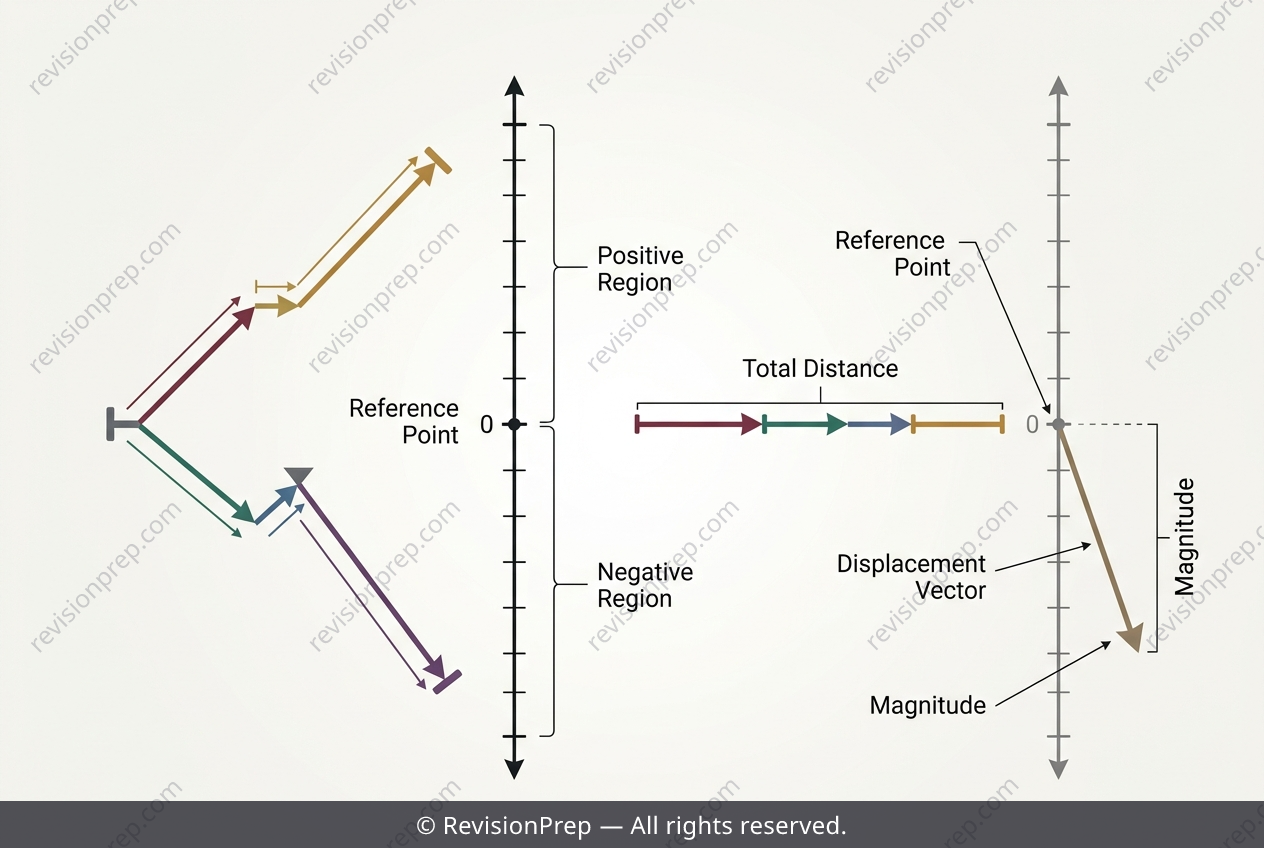
Signed real numbers turn the number line into a record of both position and direction. Positive values sit to the right of zero, negative values to the left, and absolute value strips away the sign to reveal magnitude alone — the size of a number regardless of where it points. Together, these ideas let one journey tell two different stories. Distance and displacement capture that difference. Total distance adds the size of every segment travelled, using absolute value so no movement cancels another: |450 − 0| + |−120 − 450|. Displacement, by contrast, is simply final position minus initial position, a single signed value describing net change from the starting point. A large total distance can coexist with a small displacement, because opposite directions partly undo each other. Recognising which quantity a situation demands — ground covered or net shift — is what makes signed numbers genuinely useful.
Start practising IB questions today
150,000+ IB-styled questions, criteria-mapped and instantly accessible.