
Chemistry: Why Acidic Wastewater Is Hard to Neutralise
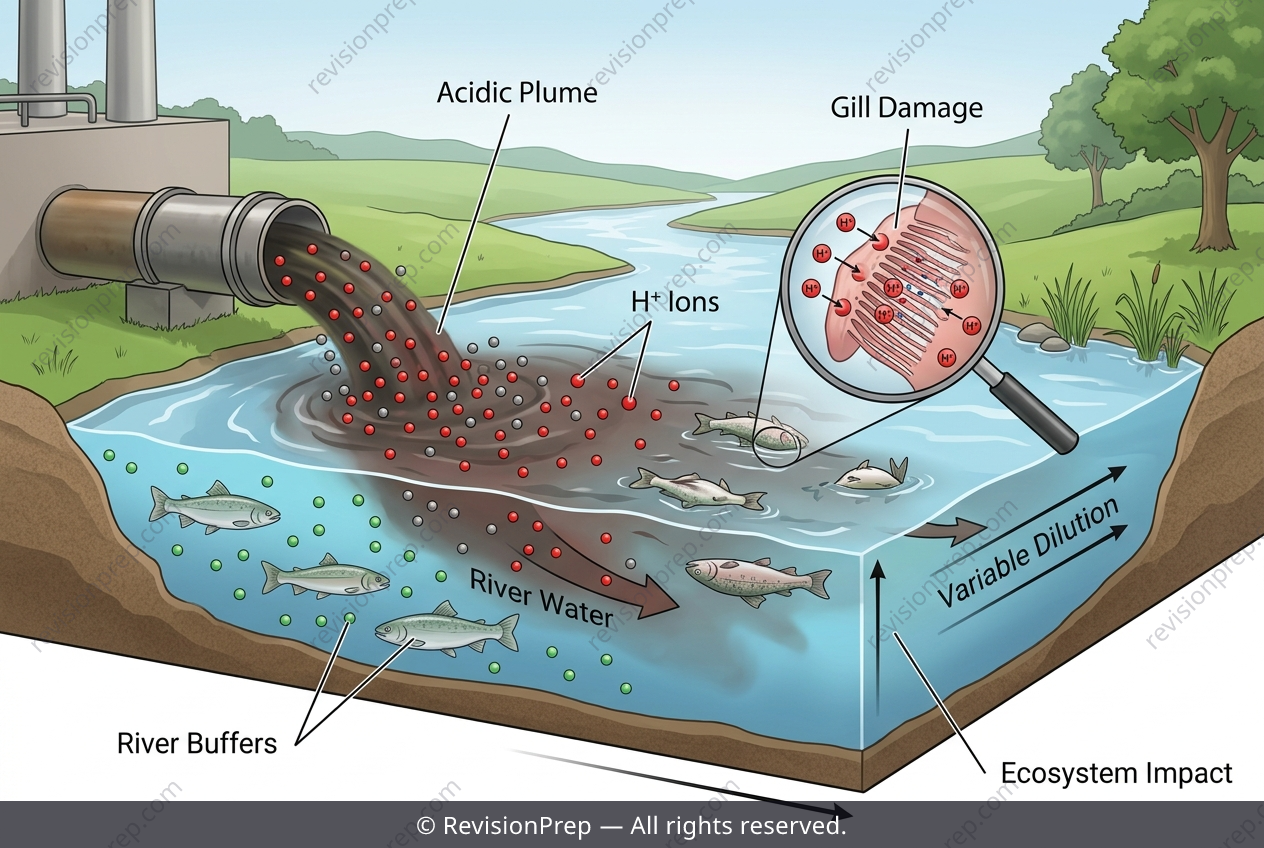
When acidic wastewater enters a river, the sudden release of H⁺ ions lowers the water's pH and sets off a chain of chemical and biological consequences. At low pH, hydrogen ions attack fish gill membranes, impairing oxygen uptake and causing fatal physiological stress. The acidity also leaches toxic metal ions such as Al³⁺ from river sediments, poisoning fish directly and destroying the invertebrates they feed on. Neutralising this effluent with lime, Ca(OH)₂ + H₂SO₄ → CaSO₄ + 2H₂O, seems straightforward, yet seasonal flow complicates it. At 50 m³/s the acid is concentrated, demanding large lime doses and producing CaSO₄ precipitate that smothers riverbed habitats. At 500 m³/s, dilution rises but the total acid load grows tenfold, and no fixed dosing rate copes with both extremes. Understanding these linked chemical, physiological and engineering factors is essential for protecting aquatic ecosystems and drinking water.
Start practising IB questions today
150,000+ IB-styled questions, criteria-mapped and instantly accessible.