
Physics: Why Some Magnets Switch Off and Others Don't
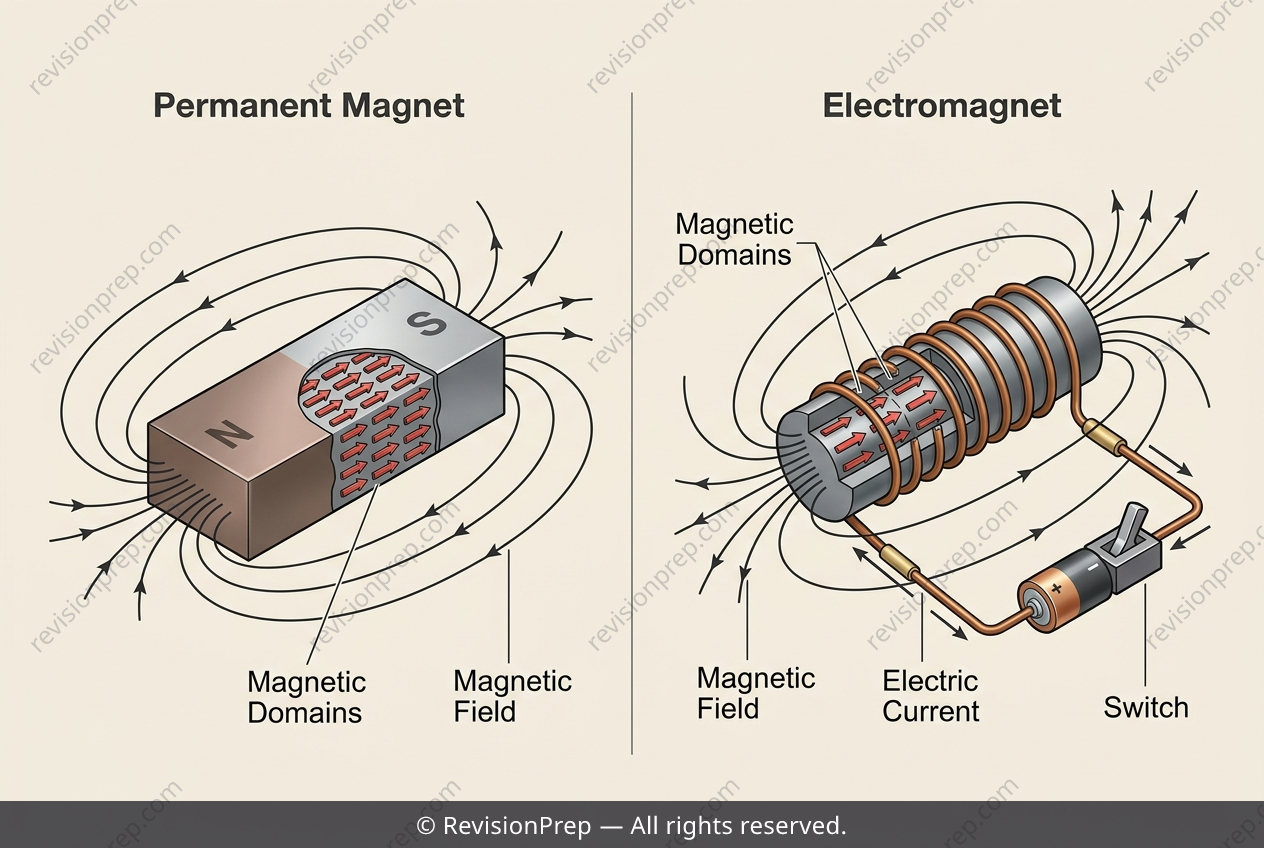
Magnetism sits at the heart of countless technologies, from electric motors to doorbells, yet not all magnets behave alike. The key distinction lies between permanent magnets and electromagnets, and it comes down to structure. A permanent magnet is a solid piece of magnetic material, such as iron or steel, while an electromagnet consists of a coil of wire wrapped around a magnetic core. This structural difference explains why one magnet is always on and the other can be switched off. An electromagnet generates its field only while electric current flows through the coil, so cutting the current collapses the field entirely. A permanent magnet contains no coil and no current; its magnetism arises from the fixed alignment of internal magnetic domains, which cannot simply be turned off. Understanding this relationship between structure and function is essential for appreciating how devices control magnetic fields on demand.
Start practising IB questions today
150,000+ IB-styled questions, criteria-mapped and instantly accessible.