
Chemistry: Chemical Change vs Physical Redistribution
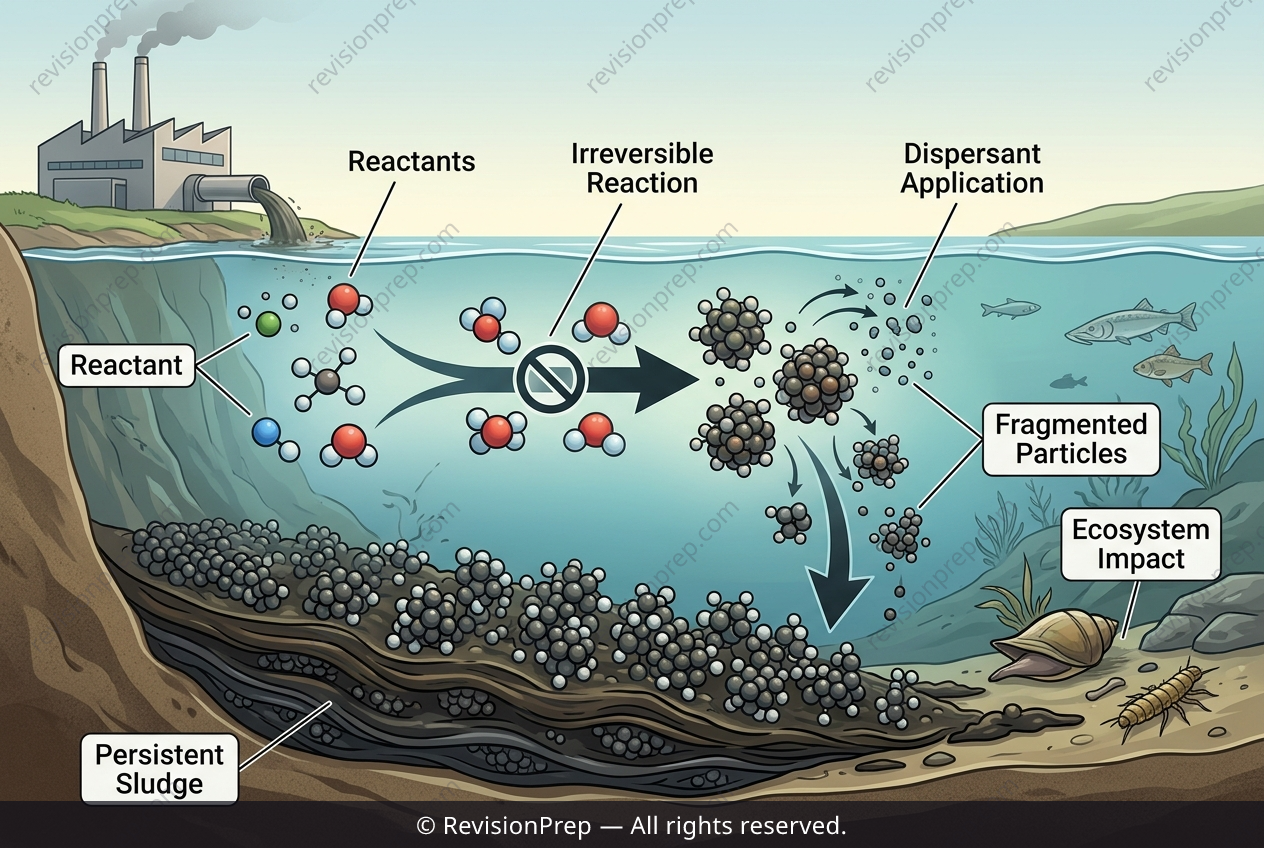
Chemical changes are irreversible transformations in which reactants break existing bonds and form new ones, producing substances with different chemical properties. In a river, a dissolved iron compound reacting with dissolved oxygen and water forms a dense, toxic iron hydroxide sludge. This new substance cannot revert to the original compound under natural river conditions — reversal would demand significant energy or specific chemical conditions absent from the river. Such persistence matters because the sludge settles on the riverbed, smothering benthic invertebrates, destroying habitats and reducing biodiversity, while toxic iron compounds may leach into groundwater used for drinking, causing chronic poisoning or long-term organ damage. Understanding this distinction shapes how contamination is managed. A dispersant may fragment the sludge into fine suspended particles, but fragmentation is physical, not chemical: the toxic iron hydroxide remains chemically unchanged. The contamination is redistributed through a larger water volume rather than removed, potentially increasing uptake by aquatic organisms. Recognising that only a genuine chemical transformation alters the substance itself is essential for evaluating whether any proposed cleanup actually solves the problem.
Start practising IB questions today
150,000+ IB-styled questions, criteria-mapped and instantly accessible.