
Chemistry: Distinguishing Chemical and Physical Change
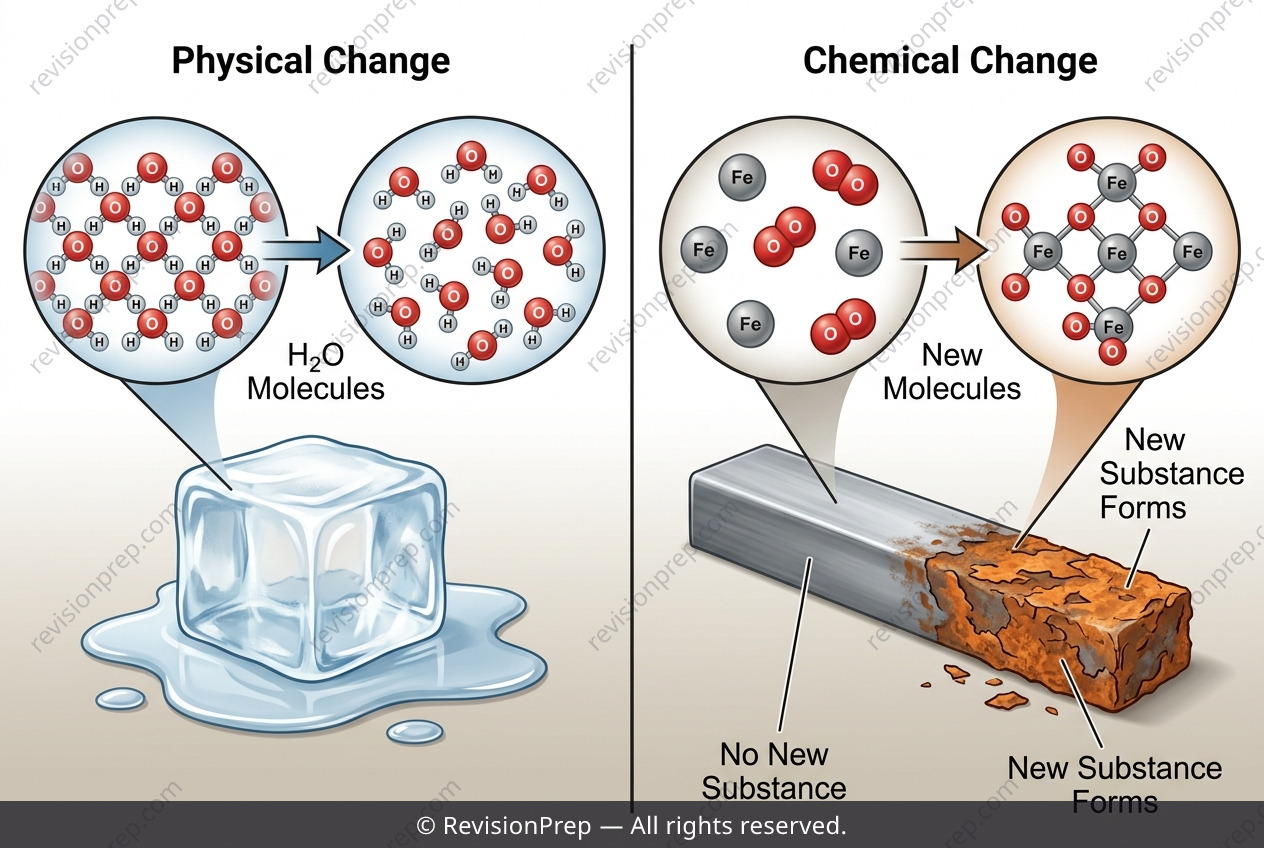
Every change in matter can be sorted into one of two categories: physical or chemical. A physical change alters only the state or form of a substance, while its chemical identity stays the same — ice melting into liquid water is still H₂O, whether solid or liquid. A chemical change, by contrast, produces a genuinely new substance with different properties, as when iron reacts with oxygen and water to form hydrated iron(III) oxide, Fe₂O₃·nH₂O, the orange-brown rust that flakes off a gate. This distinction matters because it underpins how chemists describe reactions, predict products, and recognise evidence of change. The key is to look for whether the original substance survives the process. Observable clues — a colour change, a new solid appearing, or simply a shift in state — reveal which type of change has occurred. Rust's orange-brown colour signals a new compound; melting ice signals only a change of state.
Start practising IB questions today
150,000+ IB-styled questions, criteria-mapped and instantly accessible.