
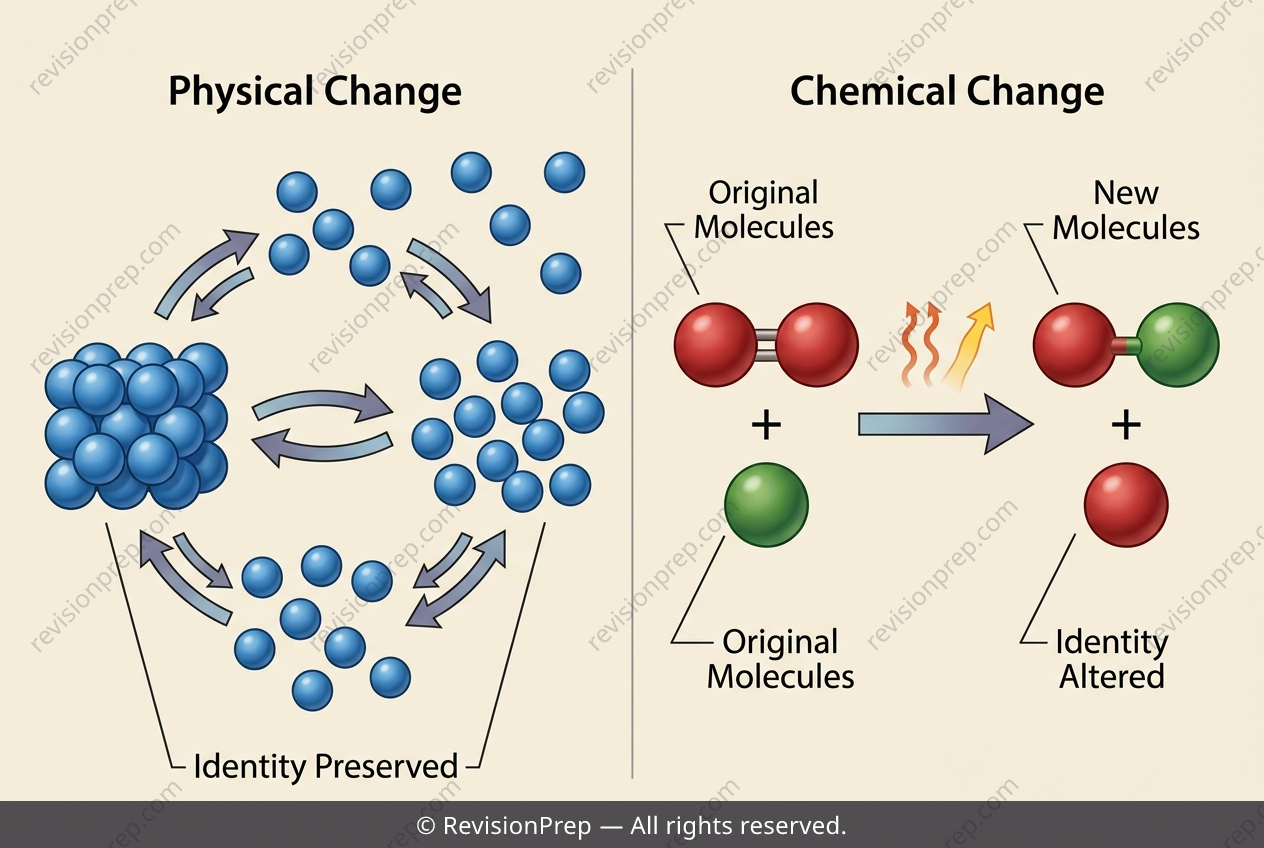
Chemistry: Chemical Identity Defines Change Type
Every chemical reaction involves a change in chemical identity, but not every change a substance undergoes is a chemical one. Distinguishing physical from chemical changes means asking whether the original substance still exists after the change. Melting, boiling, and dissolving are physical: the substance's chemical composition is untouched, and the change is typically reversible. Combustion, oxidation, and decomposition are chemical: new substances with new compositions and properties appear, and the original material cannot be recovered by simple physical means. A burning candle shows both types of change side by side. The wax pool near the wick is physical melting, while the yellow flame, warm air, and black soot are chemical. Energy released as light and heat, formation of a new substance, and production of combustion gases all signal that wax molecules have been permanently broken down and new bonds formed. Soot, largely carbon, has a different composition and structure from the original hydrocarbon wax — evidence that chemical identity, not just physical state, has changed.
Start practising IB questions today
150,000+ IB-styled questions, criteria-mapped and instantly accessible.