
Chemistry: Environmental Impacts of Chemical Change
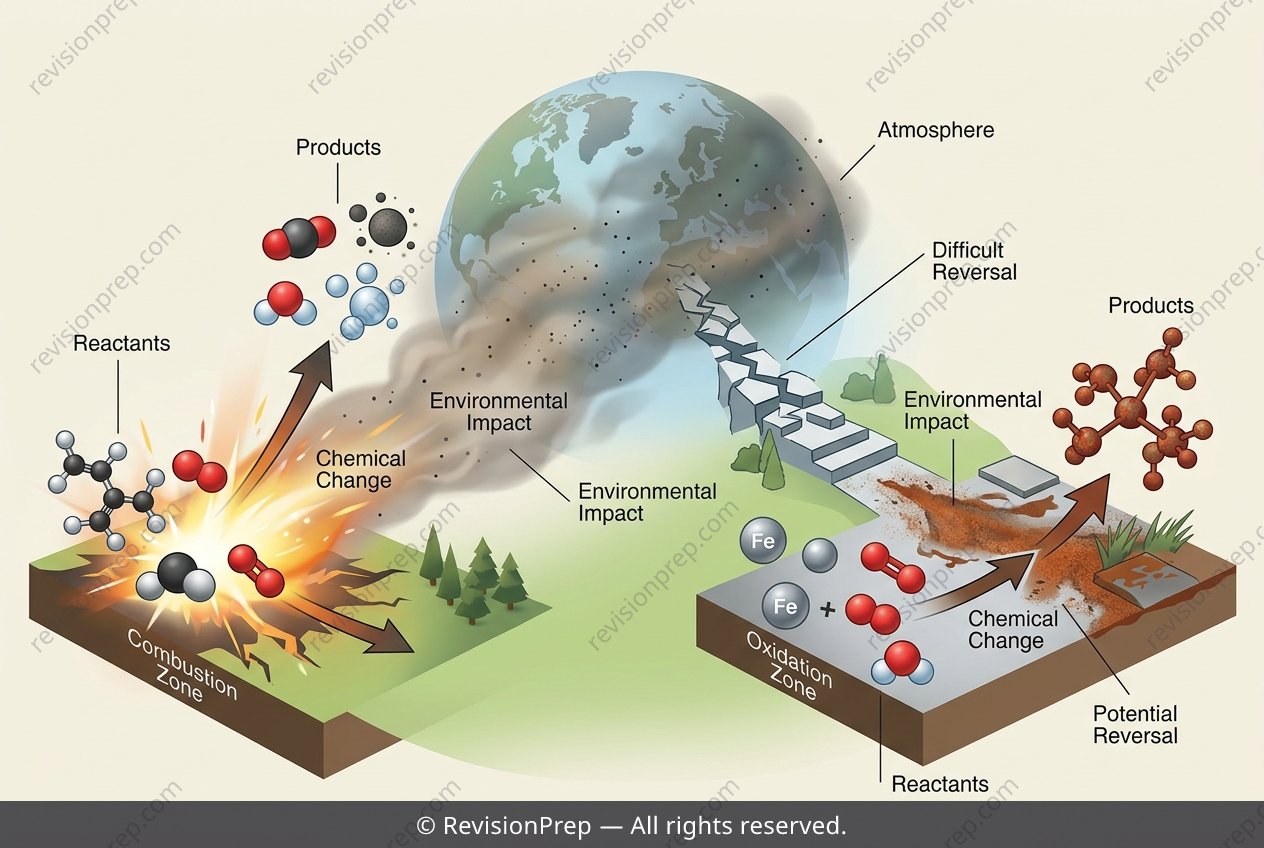
Chemical changes transform substances into entirely new materials with different properties, and recognising them is central to understanding chemistry in the real world. When a log burns, wood and oxygen produce carbon dioxide, water vapour, and ash. When an iron nail rusts, iron, oxygen, and water form hydrated iron(III) oxide, Fe₂O₃·nH₂O. In both cases, the products cannot simply be recombined to regenerate the original reactants, confirming that new substances have formed. These transformations matter because their consequences extend far beyond the laboratory. Burning wood releases CO₂, a greenhouse gas that drives global warming, while rusting weakens iron structures such as bridges and buildings, demanding energy and raw materials for replacement steel. The two processes also differ in reversibility: atmospheric CO₂ persists for centuries, reabsorbed only slowly through photosynthesis or geological processes, whereas rusting, though destructive, can be addressed through treatment and replacement. Understanding these distinctions helps explain why some environmental impacts are far harder to undo than others.
Start practising IB questions today
150,000+ IB-styled questions, criteria-mapped and instantly accessible.