
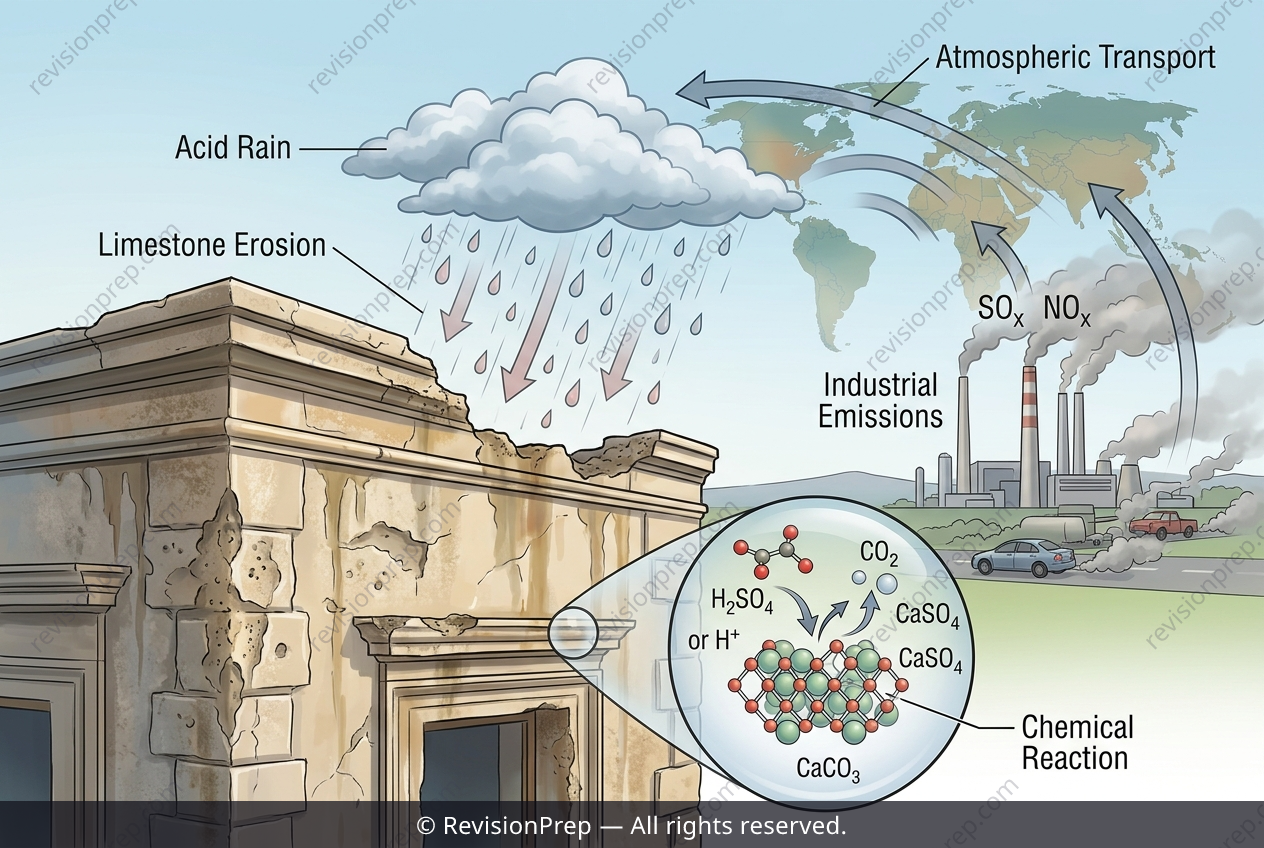
Chemistry: How Acid Rain Weathers Limestone Monuments
Acid rain is a direct consequence of industrial emissions, where sulfur dioxide and nitrogen oxides react in the atmosphere to form sulfuric and nitric acids. When this acidic precipitation falls, it chemically weathers limestone through reactions such as CaCO₃ + H₂SO₄ → CaSO₄ + H₂O + CO₂, converting insoluble calcium carbonate into soluble calcium sulfate that rainfall washes away. This matters because limestone forms the fabric of countless buildings and monuments, and its gradual dissolution causes surface erosion, loss of carved detail, and weakening of load-bearing stone over time. The challenge extends beyond chemistry into geopolitics. Because sulfur dioxide emissions travel on prevailing winds, the pollution released in one country is often deposited as acid rain in another, making this a transboundary problem. The source and the damage occur under different jurisdictions, so effective solutions require international cooperation on emissions regulation — coordination that is notoriously difficult to achieve. Understanding both the reaction mechanism and its global reach is essential to grasping why acid rain remains a persistent environmental issue.
Start practising IB questions today
150,000+ IB-styled questions, criteria-mapped and instantly accessible.