
Chemistry: How Chemical Properties Decide Safe Storage
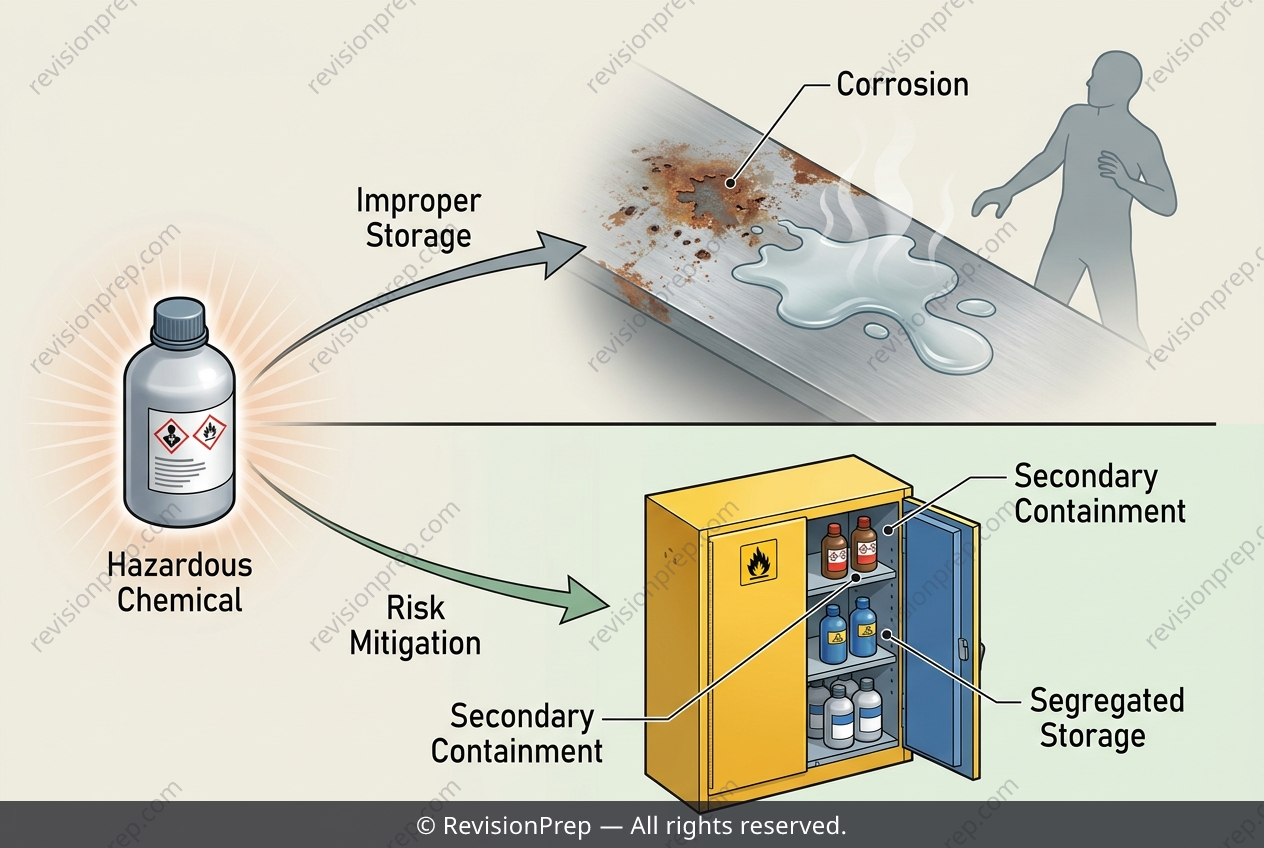
Storing chemicals safely is a core part of laboratory practice, and concentrated sulfuric acid is a particularly demanding case. This topic explores how the properties of a substance dictate where and how it should be kept, linking acid behaviour to practical hazard assessment and mitigation. Concentrated H₂SO₄ is a strong, diprotic acid that is highly corrosive and dangerously reactive. Its storage arrangement matters because each material nearby can trigger a distinct hazard: glass may shatter and release acid onto a metal shelf, where the acid reacts to produce flammable hydrogen gas (H₂) and heat; a nearby sink raises the risk of violent, exothermic dilution that spatters corrosive liquid. Safer storage therefore combines an acid-resistant plastic container, secondary containment, a non-metallic shelf, and separation from water — showing how chemical understanding translates directly into safer laboratory design.
Start practising IB questions today
150,000+ IB-styled questions, criteria-mapped and instantly accessible.