
Chemistry: How Dissociation Makes Cleaning Faster
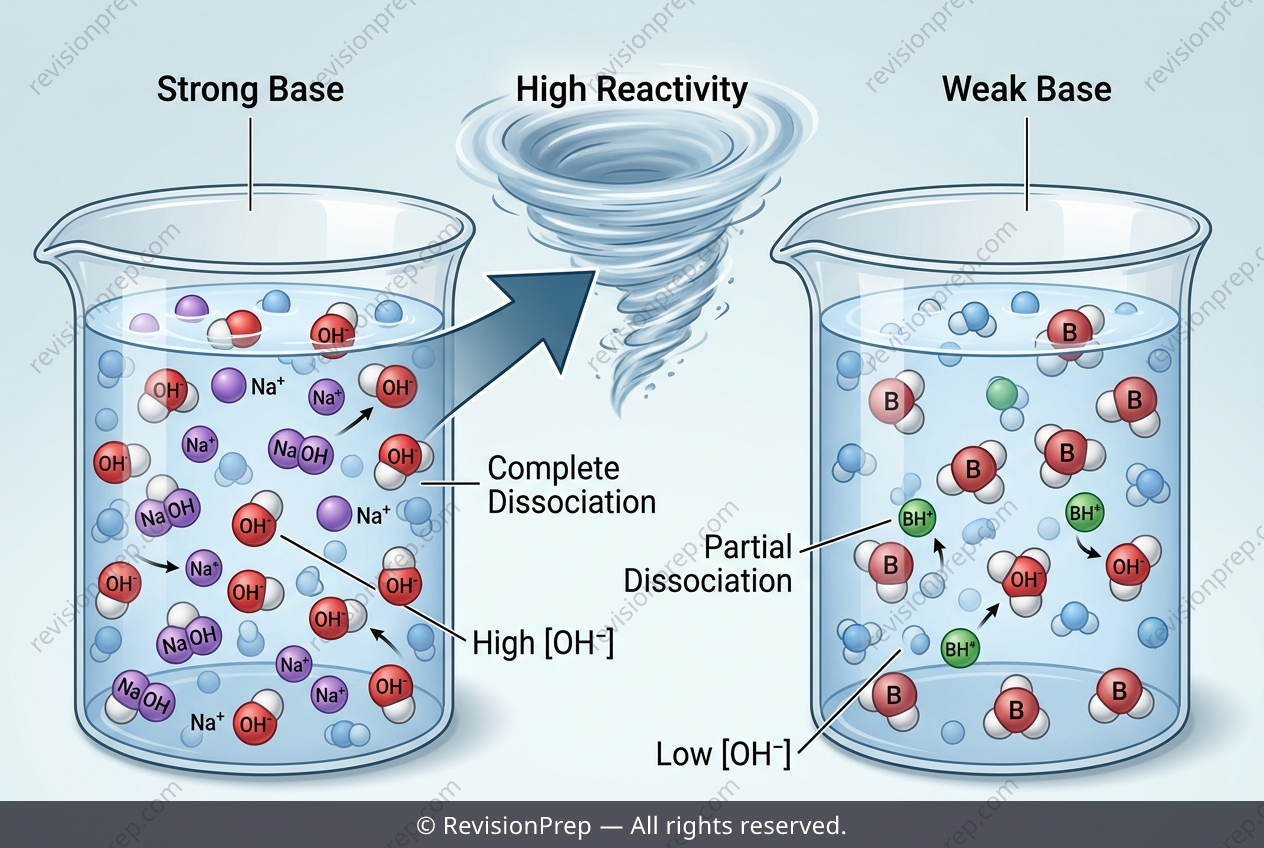
Why does drain cleaner cut through grease in seconds while soap takes far longer? Both are bases, yet their behaviour in water differs fundamentally. This topic explores base strength, dissociation, and reaction kinetics through the saponification reaction: fat + base → soap + glycerol. The key idea is degree of dissociation. Sodium hydroxide is a strong base, dissociating completely in water to release a high concentration of OH⁻ ions. Soap, a mild base, dissociates only partially, yielding far fewer OH⁻ ions. Since the rate of saponification depends on OH⁻ ions attacking ester bonds in fat molecules, a higher OH⁻ concentration drives the reaction faster. This links base strength directly to reaction rate: stronger dissociation means more reactive ions, which means quicker grease dissolution. Understanding this connection matters because it explains everyday observations, from cleaning products to biological systems, and shows how concentration and degree of dissociation together shape reaction kinetics.
Start practising IB questions today
150,000+ IB-styled questions, criteria-mapped and instantly accessible.