
Chemistry: Why Red Cabbage Reveals a Lake's Health
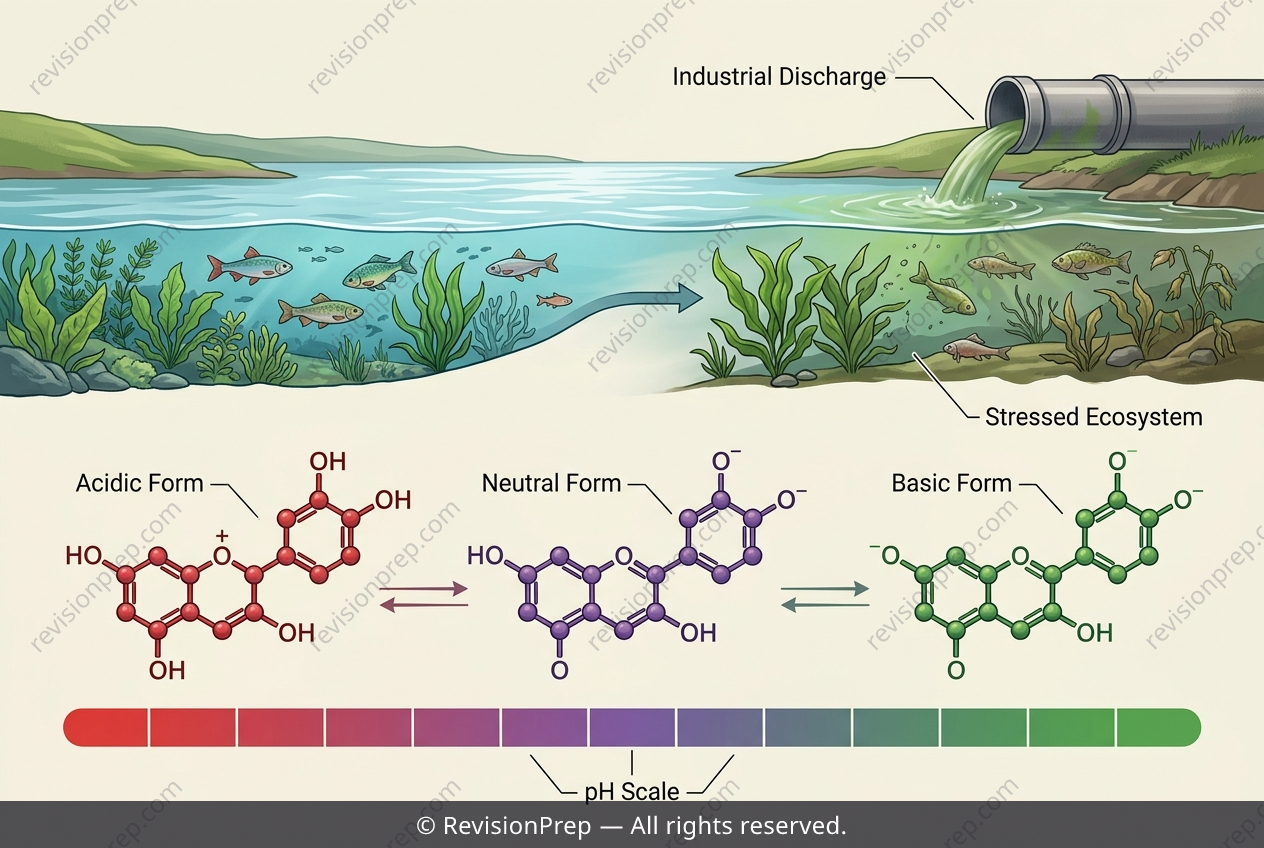
Anthocyanins are the pigments that give red cabbage its colour, and they behave as weak acids whose molecular structure shifts with the concentration of H+ ions around them. In acidic conditions the molecule stays protonated and appears red; as pH rises it loses protons, its conjugated electron system changes, and the wavelengths it absorbs shift — so in basic conditions it transmits green light instead. That same chemistry plays out far beyond the beaker. Because pH governs the equilibrium NH4+ ⇌ NH3 + H+, alkaline water converts relatively harmless ammonium ions into toxic free ammonia, damaging fish gills and invertebrate membranes and impairing respiration and osmoregulation. pH-sensitive species such as mayfly larvae and certain algae disappear first, breaking food-web links and reducing biodiversity. Understanding how a simple indicator reports pH therefore connects molecular structure to real ecological consequences.
Start practising IB questions today
150,000+ IB-styled questions, criteria-mapped and instantly accessible.